
Connecting Dissolution to Clinical Performance
IQA builds predictive in vitro-in vivo correlations that support formulation development, biowaiver strategies, and regulatory confidence in your product's release profile.

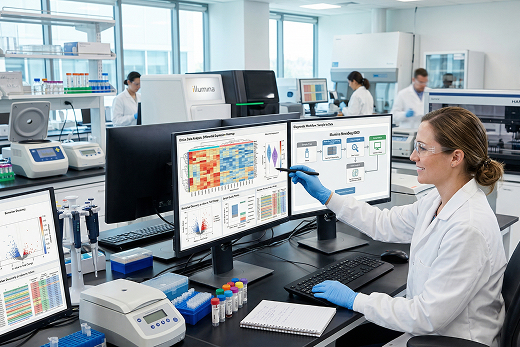
In Vitro-In Vivo Correlation (IVIVC) establishes a predictive mathematical relationship between a drug's in vitro dissolution profile and its in vivo performance. Done well, it reduces reliance on costly clinical bioequivalence studies for formulation changes, strengthens biowaiver justifications, and gives formulation scientists a quantitative tool to guide development decisions.
IQA's Clinical Pharmacology team builds and validates IVIVC models using established regulatory frameworks (Level A, B, and C correlations), connecting dissolution testing directly to the PK data our NCA and BA/BE teams generate.
Level A, B, and C Correlation Development
- Develop point-to-point (Level A), statistical moment (Level B), and single time-point (Level C) correlations based on formulation characteristics and regulatory strategy.
Dissolution Method Evaluation
- Evaluate dissolution methodologies to ensure they are discriminatory, reliable, and suitable for in vitro-in vivo correlation development.
Deconvolution & Model Fitting
- Apply Wagner-Nelson, Loo-Riegelman, and numerical deconvolution approaches to derive in vivo drug absorption profiles for correlation development.
Predictive Validation
- Perform internal and external validation of IVIVC models against regulatory bioequivalence prediction criteria to establish model reliability.
Biowaiver Support
- Develop IVIVC-based scientific justifications to support formulation and strength biowaivers, potentially reducing the need for additional clinical studies.
Integration With BA/BE and NCA
- Build IVIVC models using PK parameters derived directly by our NCA team, ensuring seamless integration between formulation development and clinical pharmacology analyses.
How We Work
Dissolution Data
Collect in vitro drug release data across relevant formulations and experimental conditions to characterize dissolution profiles.
Deconvolution
Derive in vivo drug absorption profiles from clinical pharmacokinetic data using appropriate deconvolution methods.
Correlation Modeling
Establish predictive relationships between in vitro dissolution and in vivo absorption using Level A, B, or C correlation approaches.
Validation
Perform internal and external validation of IVIVC models against regulatory bioequivalence prediction criteria.
Regulatory Package
Prepare submission-ready documentation and scientific evidence to support biowaiver requests and regulatory submission strategies.
Regulatory-Aligned Methodology
Develop IVIVC correlation models aligned with FDA and EMA regulatory guidance from the outset, supporting reliable and submission-ready evidence.
Cross-Functional Data Flow
With IVIVC, NCA, and BA/BE within the same team, in vivo PK data flows directly into correlation modeling, eliminating separate vendor handoffs and data translation errors.
Formulation-Focused Partnership
Collaborate with formulation scientists early to shape dissolution testing strategies and establish suitable methods before correlation development begins.
Validated, Documented Approach
Perform model fitting and validation within a documented, reproducible, and audit-ready environment suitable for regulatory review.
Frequently Asked Questions
Building a modified-release product?
Talk to our team about whether an IVIVC strategy could strengthen your formulation development and regulatory pathway.