
Application Development & Engineering
Design, build, enhance, and scale applications for life sciences and healthcare across regulated, data-intensive, and operationally critical environments.

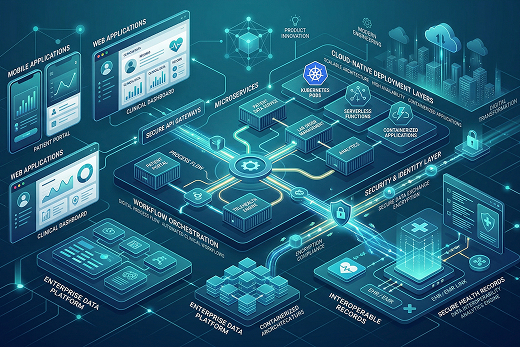
Delivery Model
Application Engineering for Real Life Sciences and Healthcare Work
Applications in life sciences and healthcare must do more than function well technically. They need to support complex workflows, integrate with data and platforms, scale with business needs, and operate in environments where quality, traceability, usability, and control matter.
IQA helps organizations design and engineer applications that support scientific, clinical, regulatory,operational, and business workflows across the full life sciences and healthcare value chain. The focus is not only on building software, but on building applications that fit real users, real processes, and real operating environments.
What IQA Supports Across Application Development and Engineering
Custom Application Development
Build fit-for-purpose applications tailored to scientific, clinical, healthcare, operational, and business workflows.
Workflow Application Engineering
Design applications that streamline approvals, reviews, collaboration, issue handling, tracking, and structured execution across teams.
Platform Extensions and Enhancements
Extend existing platforms with new modules, interfaces, workflows, integrations, and user experiences.
Web and Portal Development
Create secure, scalable portals and web applications for internal teams, partners, sites, investigators, providers, or external stakeholders.
Data-Driven Application Development
Engineer applications that work with structured, semi-structured, and connected data to support analytics, operational visibility, and decision-making.
Product Engineering Support
Support roadmap-driven product development, feature expansion, modernization, and ongoing engineering for digital solutions.
The Application Environments We Support
Discovery and Translational Applications
- Applications that support research workflows, biomarker programs, scientific collaboration, and early-stage data interpretation.
Nonclinical and Preclinical Applications
- Systems supporting SEND-related workflows, PK/PD analysis support, toxicology operations, and preclinical data-driven processes.
Clinical Trial Applications
- Applications for study startup, oversight, site support, data review, safety coordination, operational tracking, and trial execution.
Regulatory and Quality Applications
- Applications that support submission workflows, review processes, audit readiness, controlled documentation, and quality operations.
Manufacturing and Quality Operations Applications
- Tools supporting process visibility, deviation workflows, validation support, batch-related operations,and quality review.
Commercial and Market Access Applications
- Applications for business visibility, planning, insight access, market support, and post-launch operational workflows.
Healthcare and Digital Health Applications
- Applications supporting care coordination, healthcare operations, patient engagement, provider workflows, and digital health use cases
Medical Device and Connected Product Applications
- Applications supporting device-related workflows, connected data streams, software-enabled products, and digital product ecosystems.
Core Application Development and Engineering Services
Technology- and Tool-Agnostic by Design
IQA is technology-agnostic. We work with in the client’s preferred architecture, engineering standards, hosting model, integration patterns, and long-term technology direction.
The goal is not to force a technology stack. It is to build the right application for the workflow, users,and operating environment it needs to support.
That can include:
Use Cases
Where Application Development and Engineering Create Value
Why Application Development and Engineering Matter More Now
Life sciences and healthcare organizations are working in increasingly connected, data-rich, and workflow-driven environments. Off-the-shelf platforms may solve part of the problem, but many critical workflows still require fit-for-purpose applications that align with the way teams actually work.
The real value is not in building software for its own sake. It is in creating applications that improve execution, visibility, and user effectiveness.
Application development and engineering now matter more because they help organizations:
Why IQA for Application Development & Engineering
Built for the Full Life Sciences and Healthcare Value Chain
We support applications across discovery, nonclinical, clinical, regulatory, manufacturing, commercial, healthcare, and connected product environments.
Workflow-Led Engineering
We design applications around real user needs, business processes, and operational outcomes—not just technical specifications.
Technology-Agnostic Delivery
We work within the client’s preferred stack and choose engineering patterns that fit long-term business and platform needs.
Connected to Data, Analytics, and AI
Our applications are designed to work with broader data foundations, analytics environments, and AI-enabled workflows.
Built for High-Trust Environments
We understand the importance of usability, traceability, control, and fit-for-purpose engineering in life sciences and healthcare settings.
Build Applications That Fit Real Work
Explore how IQA helps life sciences and healthcare organizations design and engineer applications that improve workflows, connect systems, and support better execution across the full value chain.